Why My Vision Statement Stays The Same

Image of dancers depicting a dynamic core and representing how a vision statement should be built.

Last week, I posted an article on my blog about vision statements and why they should be dynamic. This week I continue the conversation with why they should also stay the same. A documented vision is much like the itinerary for your best vacation. It shows what you want your end destination to look like. It can be very detailed and rigid, full of all the activities you want to achieve or very simple and open, but at of the day your vision will and should align with your most important values.

As I mentioned, your vision should be flexible, just in case you are offered an upgrade on your trip, but it should also have its end goal in mind. Iy you successfully want to complete it. If your end goal was a fun family vacation, you would be amiss if you spent your time alone back at the hotel room working.

So how do we keep our code in mind while being dynamic at the same time?

Stick to your values

Knowing what you value in life helps keep you constant and in touch with your desires.  When writing your vision statement, analyze which value of yours are present, and ask if those are the most important to you.

Remind yourself often

Recording your vision and values attached to them so you can look at them often will keep you consistent. This will keep it in your mind, and allow your subconscious to look out for ways to act.

Build your value vocabulary

Consistently improving your language is a great way to enhance your core vision because as it grows you realize that you are progressing to new levels and increasing the intensity of the values that act with you.

Your core vision will provide you with a fulfilling success. Your dynamic vision will make it an adventure. Keep in mind these two parts to balance the path of progress.
photo credit: CO0P4240.jpg via photopin (license)

Valuing people hurts your bonds

In preparation for a workshop I was going to give, I ended up doing a value identification exercise.

quarters balancing represents value and teamwork

It was then I realized the names of the important people in my life: my husband, daughter, and other family members did not pop up.

Part of me felt obligated to write them down on my list, but my mind kept calculating that this connection was off. After reflecting for a bit, I realized that value should only be placed on objects, actions, and ideas. For instance, my husband is priceless and, therefore, invaluable. Now his influence skills, care of his family, and trustworthiness are actions and qualities I have come to value during our relationship. His being as a person was never something I could weigh against any human measurement of value.

When we value others we equate them to commodities. Whether it is positive (Jenny a valuable member of the team) or negative (Rich wasn’t worth a dime) we lower their potential and limit their possibilities to imperfect human measurements. Finally, we subject ourselves to the possibility of measuring our worth with money, possessions, or other human values. Karl Marx, a philosopher who studied weaknesses in the purely capitalist society, noted the concept of commodity fetishism or measuring social relationships by their usability or where the object is valued in place of the work behind the object. A lot like reality celebrities Hollywood glitz and glam supersedes the low-budget, low-quality content produced on reality TV shows.

So when relating with others, build a stronger connection not by valuing them for who they are, but seek, find, and appreciate the value of what others do. How do we relate to others in a positive way without placing value directly on the person?

Consider all of the other ways we can relate. 

For instance, I love my husband, care deeply for my daughter and value the trust I share with my sister. There are so many other ways to connect our beings to another without demoting them to the level of an object.

How can you do that today?

photo credit: Balance (license)

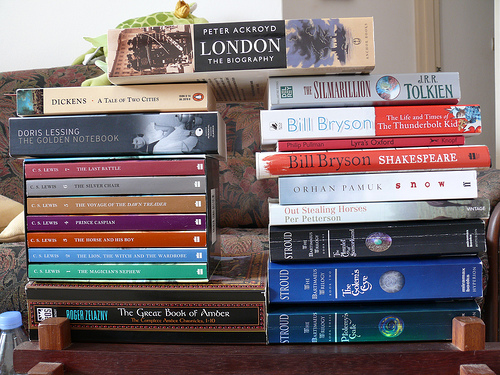
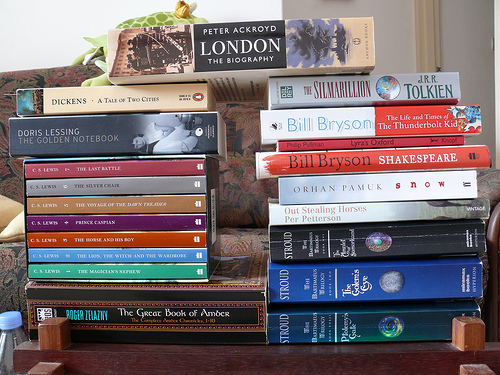
Stack of fiction books on a desk

5 Ways To Read 5 Books A Week

Stack of fiction books on a desk

I prefer non-fiction myself.

Great leaders take in a lot of information, and when you are just starting out with your passion you may find there is hardly any time to sit down and take in everything you need to know in order to launch your successful venture. Having no time is a limiting mindset that will hold you back. Fortunately reading books has gotten a lot simpler these days. Here are the 5 ways to read at least 5 books per week in order to maintain my edge and personal development.

Change Your Attitude About Reading 

First, you do not  have to read every word of a book to have successfully read it. While yes there are some books  worthy of being fully read, a lot of books will be perfectly useful if you use speed reading practices. Skim, scan,  and  trust your ability to understand concepts without reading every word.

Read on Your Way To Work

One of my favorite websites on the entire internet is my library’s e-book collection. Filled with a host of free e-books and audio books waiting to be taken in by any library card. Check out your library and see if they offer audio book options, which now can often be played through your smartphone. If not YouTube has an extensive collection of audiobooks as well.

Read before you clock in 

Always get to work half an hour early. In that half hour, you can change your world. Or if that’s not possible then the time before you clock in for lunch is another space of time to spend reading. Typically I set a ten-minute clock and go as far as I can. Progress will always be made with consistency.

Read during your downtime
If you are at work, there will be downtime. While I advocate using that downtime to be a better work, that could also include being a better leader, which is applicable in any industry or company. Once again go to your library’s website to see if they have electronic books. Another possibility is letting an audiobook play in the background in lieu of your awesome work playlist.

Read during chore time 
Unless you have a maid, you will have to do a chore or two. The point here is there are some weekly activities you naturally do, like the laundry, dishes, or whatever is going on in the fridge. Use the time to put an audiobook on in the background.

Always find ways to acquire more knowledge for that is the substance of creative thinking, which is the habit of success.

photo credit: Recent, present and future reading material via photopin (license)

Nothing can dim the light that shines within you. By Maya Angelou

3 Ways To Put Yourself First so You Can Lead Better

3 Ways to Put Your Self First

Nothing can dim the light that shines within you. By Maya Angelou

Nothing can dim the light that shines within you.

A mastery of personal leadership is essential step before influencing others around you. This includes control over how you communicate with your self and others, how you motivate yourself, and how your body’s message comes across. All of the skills are also the easiest to achieve because the subject is quiet easy to work on. YOU being the subject at hand. The only way you can improve your personal leadership is by putting your self first. Now this isn’t the only kind of leadership; there is team, business, global, societal, and many other leadership areas requiring the use of a principled recipe of skill sets. If you can master personal leadership first you will be able to easily and flexibly become more confident in other areas of leadership as well.  So how can you put yourself first without becoming self-centered? Here are five easy practices:

1.     Have a day carved out for you: Pick a day out of the week where you cater to your physical, mental, and emotional being. Pamper your self in whichever way you see fit, even if it’s only for a few hours on that day. I enjoy doing a longer session of yoga, writing, listening to my favorite playlist and having a freestyle dance workout session, and watching movies/marathons with my husband. Having a YOU day is a great way to remember you are your closest friend.

2.     Write/Draw/Speak your values: Your values become your priorities, and whatever you prioritize comes true. Knowing what your values are and checking back in with them on a regular basis keeps your focus centered so your drive can move forward.

3.     Make your vision of the future be the wildest, most awesome, future your could possible choose. Successful leadership thrives on a motivating end-goal. If you are setting your sights to short then you may end up with a less then stellar destination. Go for the gold because your subconscious won’t find solace in the status quo.

Personal leadership requires you to take into account the leader and the follower, which is why it is an excellent gateway to more advanced and complex levels of leadership. In addition, it builds your drive and motivation to go after where your leadership is best placed. Take time to remember your self-interests and make sure they align with your values, and you will be well on your way to your most abundant and joyous success.